On May 1, 2026, Veppanu™ (Vepdegestrant, ARV-471), a heterobifunctional protein degrader co-developed by Arvinas and Pfizer, received FDA approval for adults with estrogen receptor (ER)-positive, human epidermal growth factor receptor 2 (HER2)-negative, ESR1-mutated advanced or metastatic breast cancer. [1]
As the first approved PROteolysis TArgeting Chimera (PROTAC), Vepdegestrant proves that targeted protein degradation (TPD) has successfully moved from bench research through clinical validation to market reality.
What is a PROTAC?
PROTAC is a unique molecule that has heterobifunctionality, characterized by a linker component that effectively links a protein of interest (POI) ligand with an E3 ubiquitin ligase (E3) recruiting ligand. PROTACs induce the formation of a ternary complex of POI-PROTAC-E3, resulting in polyubiquitination and proteasomal degradation of the POI by hijacking inherent ubiquitin-proteasome system (UPS) in the human body.
PROTACs work differently from traditional small-molecule inhibitors because they trigger degradation of the POI at very low, substoichiometric doses, acting more like chemical catalysts than occupancy-based blockers. This mechanism can reduce off-target effects, overcome some drug resistance caused by target mutations, and expand drug development to difficult or previously “undruggable” targets.
Structure of Vepdegestrant
As a pioneering drug, Vepdegestrant's structure perfectly exemplifies this mechanism, comprising three core functional modules:
- ● Targeting Ligand (Red Color): High-affinity binding to ERα (IC50 = 0.99 nM). It serves as the molecule's positioning system, exclusively locking onto the POI.
- ● E3 Recruiting Ligand (Pink Color): Binds to CRBN, introducing the degradation machinery to the reaction complex.
- ● Chemical Linker (Blue Region): Vepdegestrant utilizes a relatively rigid, cycloalkane-based linker. It precisely connects the two ligands, inducing the formation of an optimally configured ternary complex.
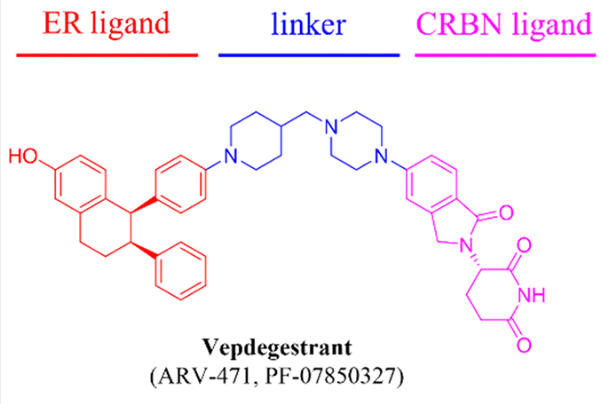
Figure 1. Structure of Vepdegestrant, source: Reference [2]
The Crucial Role of PROTAC Linkers
Numerous studies have reported the crucial role of the linker in influencing the efficacy of a PROTAC. The linker not only supports the stable formation of the ternary complex but also affects the physicochemical and pharmacokinetic properties of PROTACs. The length, group type, flexibility, and linkage site of the linker all impact the stability of the ternary complex and, ultimately, the biodegradation efficiency of PROTACs.
Based on structural types, linkers can be categorized into two broad groups:
- ● Flexible Linkers (67.66%): The most widely used type, maintaining absolute dominance. These mainly include alkyl-based and polyethylene glycol-based (PEG-based) linkers. Considered a standard feature in the PROTAC field, they not only enable systematic variations in linker length but also facilitate the rapid synthesis and high-throughput screening of molecules with distinct linkers.
- ● Relatively Rigid Linkers (32.34%): Encompassing eight types, with triazole-based and cycloalkane-based (used in Vepdegestrant) being the most commonly utilized.
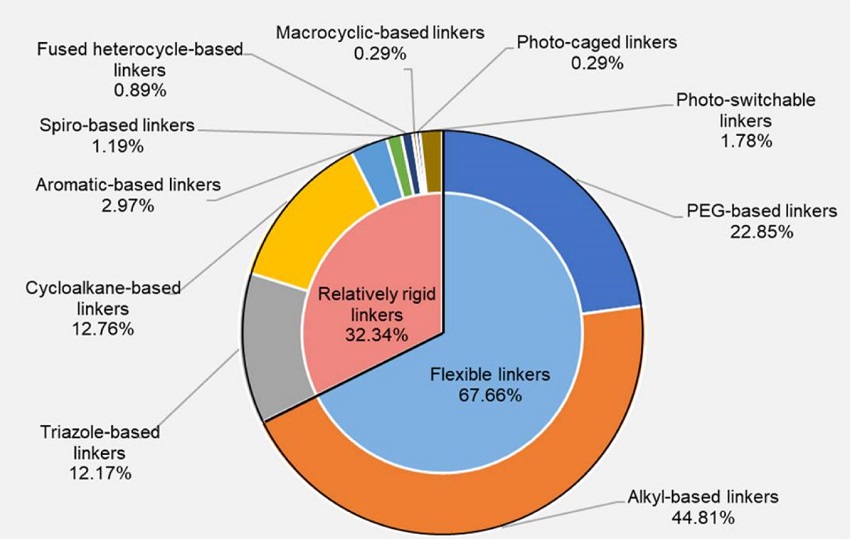
Figure 2. Structural types and characteristics of PROTAC linkers. Source: reference [3]
Advantages and Challenges of PEG-Based PROTAC Linker
Among flexible linkers, PEG-based linkers are highly favored due to their unique physicochemical properties. They often consist of two or more consecutive ethylene glycol units and can be integrated with other chains.
Core Advantages of PEG Linkers:
- ● Exceptional Hydrophilicity and Adaptability: PEG's hydrophilic nature increases the water solubility of PROTACs, significantly increasing their adaptability to physiological environments and improving developability.
- ● Versatile Modifiability: PEG's capacity to attach multiple chemical functions enhances the modifiability of PROTACs and their connectivity to various E3 and POI ligands.
- ● Excellent In Vivo Compatibility: PEG has good compatibility in vivo, mitigating the risk of inducing an immune response or toxicity.
However, PEG linkers present specific challenges during scale-up and CMC phases:
PEG linkers can be less stable than alkyl chains under certain physiological conditions and are more susceptible to oxidative metabolism. Furthermore, synthesizing high-purity PEG is technically demanding. If raw material purity is insufficient, trace impurities are amplified during the complex PROTAC synthesis process, lowering final yields and increasing overall manufacturing costs.
Biopharma PEG: High-purity PEG Linkers Supplier
Vepdegestrant's approval shows that PROTACs are no longer just a research concept; they are now entering true clinical validation. Future competition in PROTAC development will depend not only on the warhead and E3 ligand, but also on smarter linker design and manufacturability.
Biopharma PEG is dedicated to providing high-quality PEG linkers with different chain lengths and terminal groups to support rapid screening, optimization, and scale-up. In complex PROTAC synthesis, even trace impurities can drastically impact final yield and stability.
To address this, we have established a quality control system that far exceeds the industry average:
- ● High Purity (<0.50% Impurities): Monodisperse PEG linkers verified by HPLC, NMR, MALDI-TOF MS and LC-MS to guarantee strict batch-to-batch consistency. This controlled purity profile minimizes side reactions and simplifies downstream purification.
- ● Comprehensive Product Portfolio: We offer a wide range of flexible PEG linkers featuring dozens of active functional groups (such as NH2, N3, Alkyne, DBCO, NHS, COOH, Maleimide, etc), catering to needs from early R&D to commercial manufacturing.
- ● Scalable & Cost-Effective Supply: Smooth transition from early R&D to preclinical scale-up with multi-kilogram bulk manufacturing capabilities. Our established production platform lowers raw material costs and ensures a stable, long-term supply.
The approval of Vepdegestrant is just the beginning. Selecting structurally well-defined, ultra-high-purity PEG linkers will be the critical step in driving the research and development of next-generation innovative PROTAC drugs.
References:
[1]https://www.fda.gov/drugs/resources-information-approved-drugs/fda-approves-vepdegestrant-er-positive-her2-negative-esr1-mutated-advanced-or-metastatic-breast FDA approves vepdegestrant for ER-positive, HER2-negative, ESR1-mutated advanced or metastatic breast cancer
[2]Ma, Z., & Zhou, J. (2025). NDA Submission of Vepdegestrant (ARV-471) to U.S. FDA: The Beginning of a New Era of PROTAC Degraders. Journal of Medicinal Chemistry, 68(14), 14129. https://doi.org/10.1021/acs.jmedchem.5c01818
[3]Dong, Y., Ma, T., Xu, T., Feng, Z., Li, Y., Song, L., Yao, X., & Hao, G. F. (2024). Characteristic roadmap of linker governs the rational design of PROTACs. Acta Pharmaceutica Sinica. B, 14(10), 4266. https://doi.org/10.1016/j.apsb.2024.04.007