Antibody-Drug Conjugates (ADCs) demonstrated extraordinary momentum in 2025. Since the landmark approval of the first ADC in 2000, a total of 21 ADCs have been approved worldwide. In Fiscal Year 2025, Enhertu led the industry with global sales of $4.982 billion. The year also saw six ADC products reach blockbuster status with annual sales exceeding $1 billion, several of which surpassed the $2 billion revenue milestone.
The successful clinical translation of ADCs initiated the era of targeted conjugate drugs, which are designed to deliver a cytotoxic payload directly to target cancer cells, thereby maximizing therapeutic efficacy while minimizing toxicity. ADCs are only the beginning; the field is now expanding into the broader XDC (Everything-Drug Conjugates) landscape.
What is XDC?
XDC (Everything-Drug Conjugates) refers to a broad class of bioconjugated therapeutics comprising a targeting moiety (X), a payload drug (D), and a chemical linker. XDC facilitates an expansion beyond traditional ADCs into a broader spectrum of conjugation formats and a more diverse range of clinical indications.
An ideal XDC is engineered to remain stable within systemic circulation and achieve controlled payload release only upon precise arrival at the target site. Ultimately, the selection of each component directly dictates the drug’s therapeutic efficacy and overall safety profile.
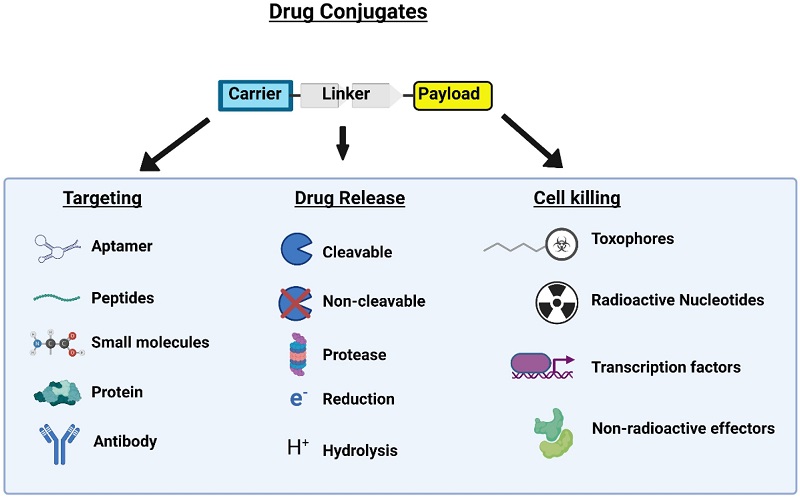
Figure 1. Drug conjugates are composed of 3 parts: carrier, linker, and payload. Reference [1]
Targeting Moiety (X): Expanding Beyond Antibodies
XDC design is no longer limited to monoclonal antibodies. The range of targeting carriers has expanded to include peptides, small molecules, antibody fragments and aptamers, etc. These diverse modalities further optimize biomolecular targeting precision, meeting the complex delivery requirements of varying pathological lesions and molecular targets.
Payload (D): Diversified Modalities and Mechanisms
Departing from the traditional reliance on cytotoxic agents, a wide range of novel payloads with distinct mechanisms of action (MoA) are being integrated into conjugate design. These include oligonucleotides, steroids, chelates, biotin, enzymes, and Proteolysis-Targeting Chimeras (PROTACs).
Linker: The Critical Molecular Bridge
The linker serves as the essential connection between the targeting moiety and the payload. Beyond its structural role, it governs both systemic stability and site-specific payload release. As such, linker design is central to minimizing off-target toxicity and optimizing the therapeutic window, making it a key determinant of overall drug performance.
Types of Drug Conjugates (XDCs)
Enabled by its modular design, XDC has evolved into a broad spectrum of therapeutic formats. Each modality leverages distinct structural features to address specific clinical needs. Currently, the industry’s R&D focus is centered on Peptide-Drug Conjugates (PDCs), Radionuclide Drug Conjugates (RDCs), Antibody-Oligonucleotide Conjugates (AOCs), Small Molecule-Drug Conjugates (SMDCs), Immune-Stimulating Antibody Conjugates (ISACs), and the emerging Degrader-Antibody Conjugates (DACs).
Peptide-Drug Conjugates (PDCs)
PDCs represent a next-generation class of targeted therapeutics following small molecules, monoclonal antibodies, and ADCs. Structurally, they consist of a targeting peptide, a linker, and a cytotoxic payload.
Compared with ADCs, PDCs offer several advantages, including smaller molecular size, improved tumor penetration, lower immunogenicity, and more controllable safety profiles. In addition, they can be manufactured via solid-phase synthesis, enabling scalable production with reduced cost.
Despite their potential, PDCs face hurdles such as rapid renal clearance and suboptimal systemic stability. As of 2026, while dozens of candidates are in clinical stages, the commercial landscape remains selective. Lutathera (177Lu-DOTATATE) stands as the primary successful therapeutic PDC on the market, following the withdrawal of Pepaxto (melphalan flufenamide).
Radionuclide Drug Conjugates (RDCs)
RDCs have successfully transitioned to commercialization. RDCs link radioactive isotopes to tissue-targeting ligands to deliver radioactivity precisely to tumors while minimizing harm to healthy tissues. This modality is highly valued for its theranostic potential—the ability to use the same targeting vector for both diagnostic imaging and targeted therapy.
To date, 11 RDCs have received FDA approval. The majority (9) are diagnostic agents utilizing isotopes like Gallium-68 (68Ga), while therapeutic approvals remain concentrated on Novartis’s Lutathera and Pluvicto (utilizing Lutetium-177). These agents have become essential components in treating SSTR-positive neuroendocrine tumors and PSMA-positive prostate cancer.
Antibody-Oligonucleotide Conjugates (AOCs)
AOCs combine the targeting specificity of antibodies with the gene-regulating capabilities of oligonucleotides. By using monoclonal antibodies as delivery vehicles, AOCs enable targeted delivery of therapeutic oligonucleotides such as siRNA and PMOs to specific tissues.
This strategy addresses key limitations of oligonucleotide therapies, including poor delivery efficiency and systemic toxicity, while improving pharmacokinetic properties
While no AOC has reached the market yet, the platform is accelerating toward the finish line. Avidity Biosciences and Dyne Therapeutics are leading the field, with several candidates targeting neuromuscular disorders (like Duchenne Muscular Dystrophy) currently in Phase 3 trials or nearing BLA submission.
Small Molecule-Drug Conjugates (SMDCs)
SMDCs utilize high-affinity small molecules as targeting ligands. They demonstrate favorable pharmacokinetic properties, enhanced cellular penetration capabilities, and nonimmunogenicity and exhibit significant therapeutic potential in solid tumors. With a variety of SMDCs currently undergoing clinical review, SMDCs bring a new perspective to cancer treatment and targeted therapy.
Immune-Stimulating Antibody Conjugates (ISACs)
Structurally similar to ADCs, ISACs replace cytotoxic payloads with innate immune agonists (e.g., TLR or STING agonists). By stimulating innate immune cells and optimizing antigen presentation, ISACs convert non-responsive “cold” tumors into immunologically active “hot” ones. This process triggers a systemic immune response and long-term memory, addressing critical barriers like tumor heterogeneity and immunosuppression. Early preclinical data has shown promise in achieving complete tumor regression and establishing long-term anti-tumor immunity.
Degrader-Antibody Conjugates (DACs)
DACs represent a sophisticated evolution of the PROTAC (Proteolysis-Targeting Chimera) technology. While PROTACs are revolutionary in their ability to degrade undruggable proteins via the ubiquitin-proteasome pathway, they often suffer from poor DMPK (Drug Metabolism and Pharmacokinetics) profiles, including low oral bioavailability and rapid clearance.
By conjugating a protein degrader (as the payload) to an antibody, DACs fix these pharmacokinetic issues. The antibody provides the necessary tumor specificity and long half-life, while the PROTAC payload offers catalytic activity, allowing for efficacy even at low expression levels. This modality is currently in early-stage development but holds immense potential for targeting complex solid tumors and historically inaccessible intracellular proteins.
The Critical Role of Linkers in XDC Development
The linker serves as the foundational bridge between the targeting moiety (X) and the payload (D), playing a decisive role in both systemic stability and therapeutic release. An ideal linker must maintain rigorous stability during systemic circulation to prevent premature payload release, which often leads to off-target toxicity and diminished efficacy. Conversely, it must facilitate the efficient release of the cytotoxic agent once it reaches the target tumor cells. Ultimately, the stability and cleavage kinetics of the linker directly dictate the pharmacokinetic (PK) profile, toxicity, and therapeutic index of the XDC.
Linkers are generally classified into two major types: cleavable and non-cleavable.
Non-cleavable Linkers: These form a stable covalent bond between the targeting moiety (X) and the payload (D). The payload is only released after the targeting moiety is internalized and degraded by lysosomes within the target cell. While these linkers offer superior stability and a lower risk of off-target release—making them ideal for hematological malignancies with well-defined targets—their release efficiency can be relatively lower.
Cleavable Linkers: Currently, the dominant choice in drug design, these linkers utilize the specific conditions of the tumor microenvironment for triggered release. Key mechanisms include enzyme-cleavable, acid-cleavable, and reduction-cleavable linkers.
PEG Linkers for XDC Development
Polyethylene glycol (PEG)-modified linkers represent a significant technical frontier in XDC R&D.
PEG linkers are far more than simple connectors; they can modulate the physicochemical and pharmacokinetic properties of the XDC. Owing to its excellent hydrophilicity and biocompatibility, the integration of PEG into a linker significantly enhances the water solubility of the XDC, preventing drug aggregation during circulation. Furthermore, PEGylation extends the drug's half-life in vivo, addressing the challenge of rapid renal clearance often seen in small-molecule conjugates like PDCs, thereby increasing overall bioavailability. And their versatile structures can be engineered with distinct functional groups at each terminus, enabling site-specific conjugation chemistry and ensuring a stable bond between the targeting moiety and the payload.
PEG linkers can be either monodisperse or polydisperse, and the two differ substantially in drug development and quality control. In XDC development, monodisperse PEG linkers are the preferred choice over polydisperse PEGs. By offering a defined molecular weight and uniform structure, monodisperse PEGs allow precise characterization and reproducible quality, ensuring consistency across batches.
Monodisperse PEG linkers can be tailored with specific terminal functional groups, such as Maleimide, NHS esters, and Azides—designed to facilitate precision conjugation between targeting moiety and payloads. This versatility supports site-specific chemistries, including thiol-coupling and copper-free "Click Chemistry," providing a robust and reproducible framework for assembling advanced, stable XDC architectures.
Prospects and Challenges
Driven by its modular design and functional versatility, XDC has become a major focus in biopharmaceutical R&D, with strong market potential. XDC is driving its expansion from oncology into indications such as cardiovascular, autoimmune, and rare diseases. However, clinical success hinges on overcoming several technical hurdles, most notably achieving precise DAR uniformity and mitigating off-target toxicity caused by premature payload release.
As the linker is the definitive component governing XDC stability and efficacy, technical innovation in this area is vital for the next generation of targeted therapies. Biopharma PEG specializes in high-purity, monodisperse PEG linkers, offering an extensive modular library with scalable synthesis ranging from milligram to kilogram quantities.
References:
[1] Heh, E., Allen, J., Ramirez, F., Lovasz, D., Fernandez, L., Hogg, T., Riva, H., Holland, N., & Chacon, J. (2023). Peptide Drug Conjugates and Their Role in Cancer Therapy. International journal of molecular sciences, 24(1), 829. https://doi.org/10.3390/ijms24010829
[2] Chen B, Kang W, et al. Antibody–drug conjugates in cancer therapy: current landscape, challenges, and future directions. Mol Cancer. 2024;23(1):161. doi:10.1186/s12943-024-01939-w