Proteolysis-targeting chimeras (PROTACs) has emerged as an important approach in drug discovery, with the first PROTAC - Vepdegestrant (Veppanu) approved as a medicine. PROTACs are heterobifunctional molecules composed of a ligand that binds a protein of interest (POI), a ligand that recruits an E3 ubiquitin ligase, and a chemical linker that connects the two ligands.
When a PROTAC brings the target protein and E3 ligase into proximity, it can promote the formation of a ternary complex that enables target ubiquitination and subsequent degradation by the proteasome. Unlike small molecule inhibitors, PROTACs achieve target protein degradation in its entirety in a catalytical fashion.
The linker is a key determinant of PROTAC performance. Its length, flexibility, rigidity, polarity, and chemical composition influence ternary complex formation, the geometry of target ubiquitination, and the physicochemical and pharmacokinetic properties of the complete molecule. These factors can affect degradation potency, selectivity, solubility, cell permeability, and metabolic stability. Linker selection is therefore an important part of PROTAC design and optimization.
Polyethylene glycol (PEG) linkers are widely used in PROTAC synthesis for their predictable flexibility, high solubility, multiple defined lengths availability , and robust performance under diverse coupling conditions.
- ▶ PEG linker increases the PROTAC water solubility, affecting the cell permeability, thereby improving oral absorption
- ▶ PEG linker can easily tune their length and composition via some chemical methods. Linker length contributes to degradation efficiency.
- ▶ Bi-functionalized PEG motifs enable the rapid and facile assembly of potent degrader structures.
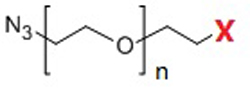
Biopharma PEG provides high-purity PROTAC PEG linkers with various active groups to assist with your PROTAC-related projects. PEG linkers are the most common motifs incorporated into PROTAC linker structures.

PROTAC PEG Linkers


| Fmoc-NH-PEG3-COOH CAS NO. 867062-95-1 |
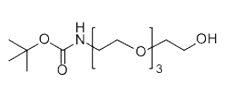
Boc-NH-PEG4-OH CAS NO. 106984-09-2 |
Tos-PEG4-Tos CAS No. 37860-51-8 |
 |
 |
 |
References:
[1] Zagidullin A, Milyukov V, Rizvanov A, Bulatov E. Novel approaches for the rational design of PROTAC linkers. Explor Target Antitumor Ther. 2020;1:381-90. https://doi.org/10.37349/etat.2020.00023
[2] Troup RI, Fallan C, Baud MGJ. Current strategies for the design of PROTAC linkers: a critical review. Explor Target Antitumor Ther. 2020;1(5):273-312. doi: 10.37349/etat.2020.00018. Epub 2020 Oct 30. PMID: 36046485; PMCID: PMC9400730.